
ProtonPACS vs Medicai for RIS/PACS Integration
Many radiology teams pay for ProtonPACS yet still need an extra viewer or file transfer to share studies with referring doctors. The mismatch shows up as delayed reports, duplicate logins, and separate storage invoices.
This guide lays out the exact integration differences between the two systems, including API access, multi-site routing, and per-study costs. By the end you will know whether Medicai can replace your current viewer stack or if ProtonPACS remains the safer choice for your workflow.
Quick Verdict: ProtonPACS vs Medicai for RIS/PACS Integration
This quick comparison highlights how Medicai's cloud-based platform stacks against ProtonPACS for RIS/PACS integration requirements.
Deployment models set these platforms apart in meaningful ways. ProtonPACS follows a traditional on-premise approach that requires local servers and dedicated IT resources. Medicai operates as a SaaS solution hosted on Microsoft Azure infrastructure with no local hardware demands.
Integration capabilities reveal another key distinction. Medicai processes 1M+ annual study transactions and handles 50M+ yearly API transactions, demonstrating proven interoperability. The platform supports standard DICOM and HL7 protocols while maintaining HIPAA and GDPR compliance standards.
Scalability differs significantly between these systems. ProtonPACS on-premise installations face hardware limitations as imaging volumes grow. Medicai's cloud architecture supports expansion without infrastructure changes, currently serving 70 clinics and hospitals with 10,000+ active doctors on the platform.
Organization size determines the better fit. Smaller facilities with limited IT staff benefit from Medicai's cloud model that eliminates server maintenance. Larger health systems may prefer ProtonPACS for complete data control, though they must manage their own infrastructure and upgrades.
At a glance: how Medicai compares to ProtonPACS, Medicai for RIS/PACS Integration on the features that matter most.
| Feature | Medicai | ProtonPACS | Medicai for RIS/PACS Integration |
|---|---|---|---|
| RIS/PACS Integration | ✓ | ✓ | — |
What Is Medicai?
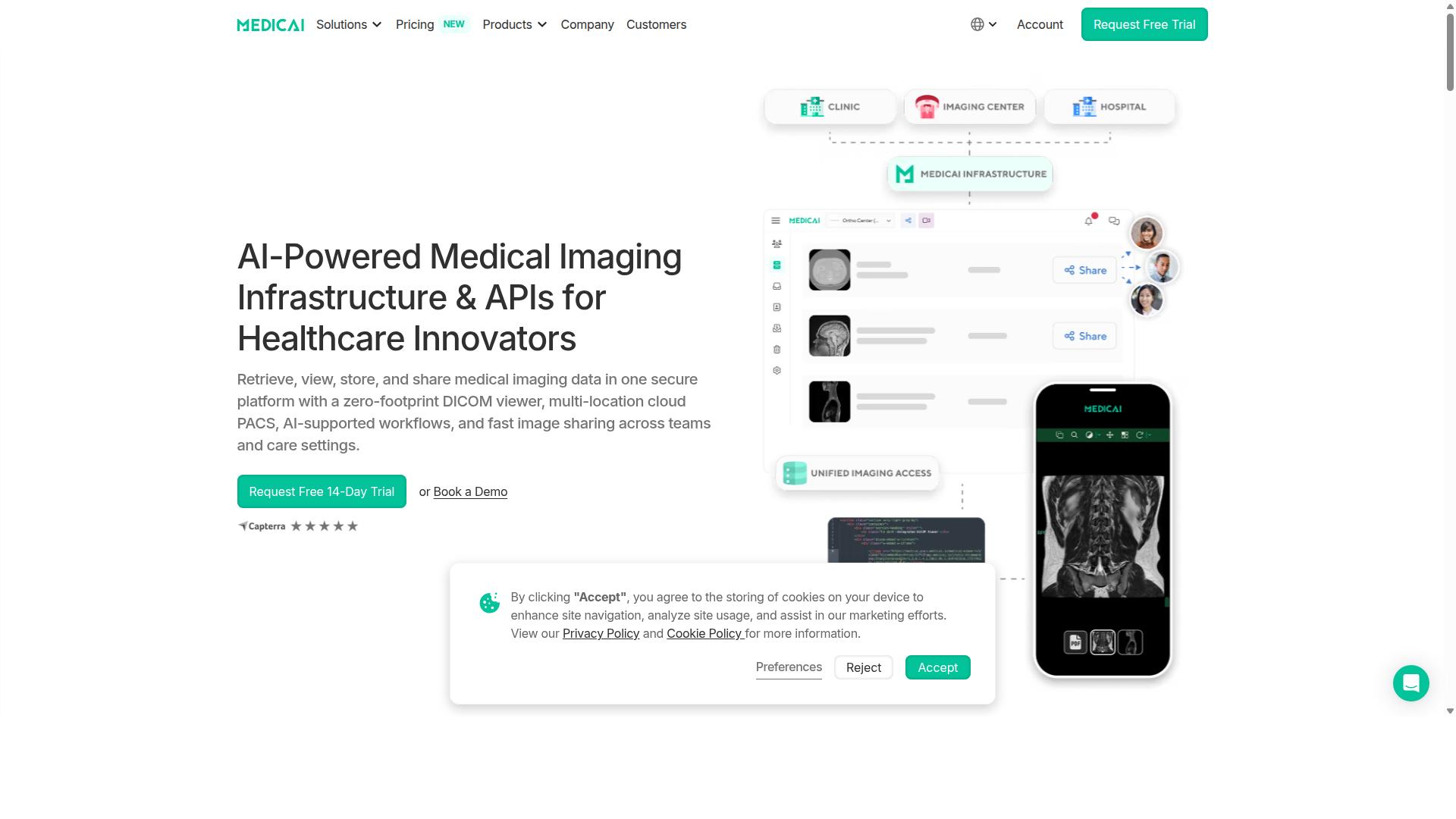
Medicai operates as a cloud-based medical imaging platform designed specifically for healthcare providers managing DICOM data. The system serves as a unified solution for medical imaging needs across different care settings.
Cloud storage capabilities allow users to access and manage imaging data from any location without local server requirements. This approach eliminates infrastructure maintenance while supporting multi-location healthcare organizations.
The platform includes a zero-footprint DICOM viewer that requires no software installation or downloads. Healthcare teams can view studies directly through standard web browsers on various devices.
Retrieval, viewing, storing, and sharing functions operate within one HIPAA-compliant environment. This integrated structure reduces the need for separate systems and minimizes data transfer between different platforms.
Secure sharing functionality enables fast image distribution across teams and care settings. The platform supports both internal collaboration and external referrals without compromising patient data protection.
Medicai provides Imaging Infrastructure as a Service (IIaaS) as its core offering. This service model allows healthcare providers to access enterprise-grade imaging capabilities through subscription-based access rather than capital equipment purchases.
What Is ProtonPACS?
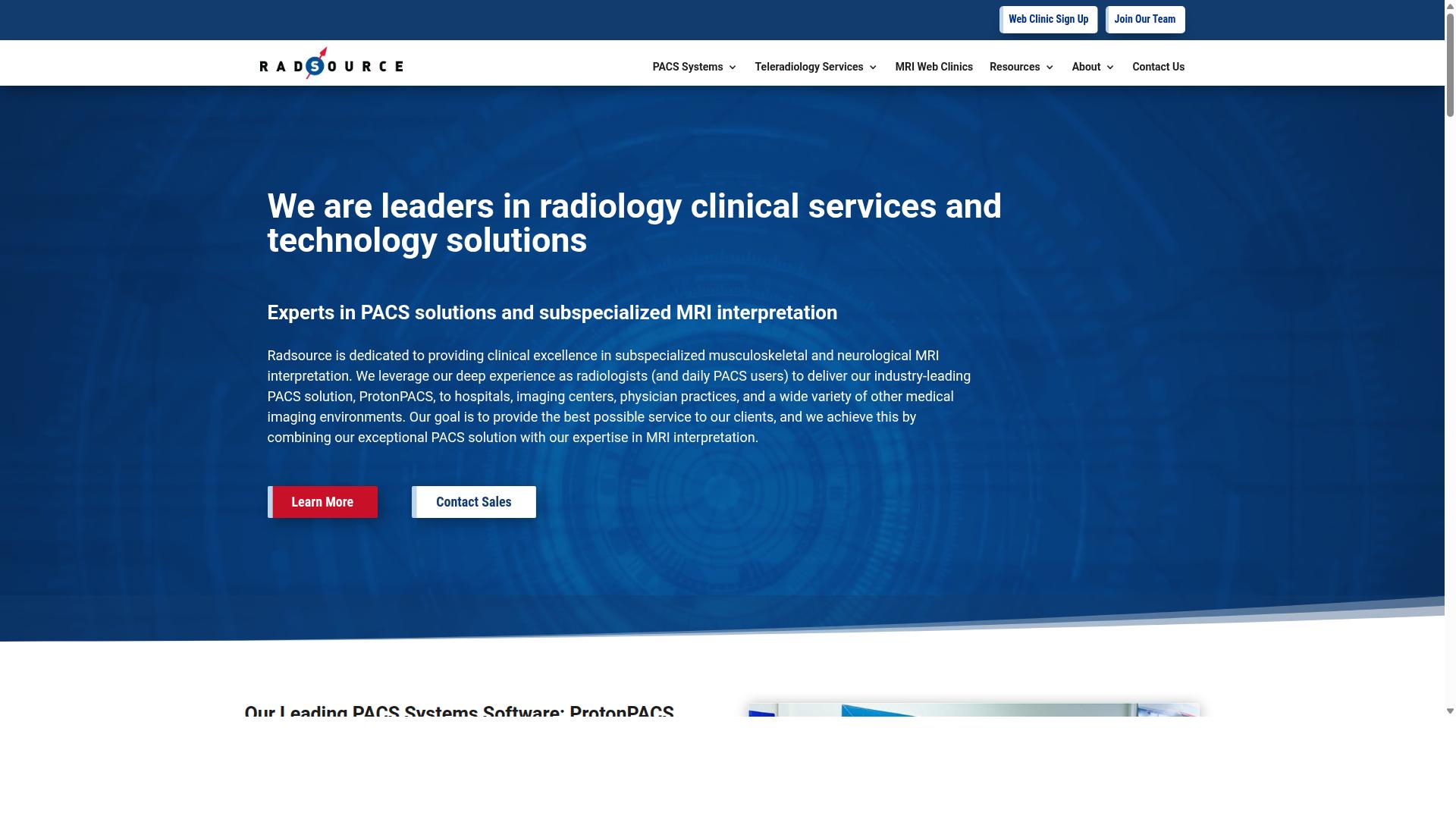
ProtonPACS provides traditional on-premise PACS solutions for radiology departments requiring localized image management. This approach suits healthcare facilities that prioritize keeping imaging data within their own infrastructure.
Many organizations choose this model when they need direct control over storage locations and access protocols. On-premise PACS installations typically require dedicated server hardware and local network configurations.
Radiology departments often deploy these systems to maintain complete oversight of DICOM studies and related metadata. The setup process involves integration with existing hospital networks and radiology information systems.
Facilities may select on-premise solutions when regulatory requirements specify data residency within their physical location. Localized control offers certain advantages for institutions managing sensitive patient information across multiple departments.
Workflow considerations include modality connections, study routing, and report generation within the radiology department. These systems typically handle image storage, retrieval, and distribution through established hospital IT processes.
What Is Medicai for RIS/PACS Integration?

Medicai enables RIS/PACS integration through standardized protocols and automated data exchange capabilities. The platform connects radiology information systems with picture archiving systems using industry-standard communication methods. This approach supports efficient image management across different clinical environments.
The system incorporates both DICOM and HL7 standards to facilitate data flow between modalities and information systems. Connect and Retrieve tools handle incoming imaging data from various sources. These include the Medical Imaging Uploader and DICOM Gateway for reliable transmission.
Study routing automation handles the distribution of completed studies to appropriate destinations within the network. The Store and Manage capabilities support this workflow through Cloud PACS and Vendor Neutral Archive options. These components provide flexible storage solutions that adapt to different institutional requirements.
Integration extends beyond basic connectivity to include structured reporting and collaborative review features. Access, Visualize, Collaborate tools enable radiologists to review studies and generate reports within the same environment. The platform also supports teleradiology workflows for remote interpretation needs.
Additional capabilities include AI-Powered Diagnostics and Radiology AI Co-Pilot features that can assist with image analysis. The Medical Image Exchange and Patient Case Management tools facilitate sharing between referring physicians and specialists. This comprehensive approach addresses both routine imaging workflows and specialized consultation requirements.
Features Compared
This section breaks down the technical capabilities of both platforms across three critical areas.
Storage architecture, automation capabilities, and access flexibility form the foundation for successful RIS/PACS integration. Each element affects how imaging departments manage growing study volumes and maintain efficient workflows between radiology information systems and picture archiving systems.
Departments evaluating these platforms need to understand how each approach handles data growth, system interoperability, and multi-site collaboration. The following comparison examines these factors using verified platform specifications and general industry capabilities.
Cloud Storage and Scalability
Storage architecture determines both immediate capacity and long-term growth potential for imaging departments.
Traditional on-premise solutions require capacity planning and hardware refresh cycles as study volumes increase. These systems often face limitations when demand exceeds initial projections, requiring additional infrastructure investments and maintenance overhead.
Medicai offers cloud-based elastic storage through three pricing tiers. The Starter plan provides 500 GB of cloud storage with unlimited user accounts at $249 monthly. The Standard plan includes 2 TB of cloud storage and one connected location for $749 monthly. Enterprise customers receive custom cloud storage allocations supporting multiple connected locations.
Cloud scalability eliminates the need for hardware refresh cycles and supports growing study volumes without infrastructure limitations. Microsoft Azure partnership ensures reliable performance and HIPAA compliance across all storage tiers. Yearly billing options provide 15 percent savings compared to monthly plans.
API and Workflow Automation
API capabilities directly impact how efficiently systems exchange data and automate clinical workflows.
Effective RIS/PACS integration requires seamless communication between radiology information systems and picture archiving components. Manual data entry and disconnected workflows create delays and increase the risk of errors in clinical processes.
Medicai processes 50M+ yearly API transactions. These capabilities enable automated study routing and report generation across connected systems. The platform handles 1M+ studies transacted or processed per year through these automated workflows.
API integrations reduce manual data entry requirements and improve inter-system communication between RIS and PACS components. Structured reporting features and medical image exchange capabilities support consistent data flow across different healthcare environments. DICOM Gateway setup costs $1,000 one-time per location for enterprise deployments.
Multi-location Access and Sharing
Access flexibility determines whether radiologists and referring physicians can collaborate across locations and devices.
On-premise PACS solutions often limit access to specific workstations and network locations. This restriction creates barriers for multi-site healthcare organizations and remote collaboration requirements common in modern radiology practices.
Medicai provides web-based, mobile-accessible platform access through zero-footprint viewing technology. This approach eliminates installation requirements and enables real-time collaboration between multiple connected locations. The platform supports 10,000+ active doctors across 70 clinics and hospitals.
Zero-footprint viewing removes software dependencies and allows imaging access from any compatible device. Doctor imaging portal and patient imaging portal features extend access capabilities to both clinical staff and patients. Mobile imaging app availability further expands access flexibility across different clinical scenarios.
Pricing Compared
Cost structures reflect fundamental differences in deployment and scaling models between the two platforms.
Medicai offers clear monthly pricing tiers that match different practice sizes. The Starter plan costs $249 monthly and includes 500 GB of cloud storage with unlimited user accounts. The Standard plan costs $749 monthly and provides 2 TB of storage plus one connected location.
Yearly billing reduces these rates by 15 percent. The Starter plan drops to $209 monthly when paid annually. The Standard plan drops to $639 monthly under the same arrangement.
ProtonPACS pricing requires direct consultation because it operates as an on-premise solution. This model typically involves custom implementation costs that vary by facility size and infrastructure needs.
Enterprise customers can access custom storage amounts and multiple connected locations through Medicai. Per-study pricing options exist for organizations with variable imaging volumes. A 14-day trial of Starter plan features is available without requiring a credit card.
The DICOM Gateway setup fee is $1,000 per location as a one-time charge. Refunds are not available for partial billing periods under either plan.
Who Should Choose Medicai
Organizations prioritizing rapid deployment and minimal IT overhead gravitate toward cloud-based solutions. Hospitals, imaging centers, and specialty practices across orthopedics, neurology, oncology, and radiology benefit when immediate scalability is required without hardware investments.
Facilities requiring multi-location access and rapid integration capabilities find cloud platforms particularly valuable. Medicai serves these diverse providers through its SaaS model, which eliminates the need for on-premise infrastructure investments while supporting extensive specialty care across multiple disciplines.
The platform accommodates virtual care providers, telemedicine platforms, and teleradiology services that need consistent access across distributed teams. Clinical trials and medical education organizations also use the system for coordinated image management and study collaboration.
Patient portals extend access to individuals who need their imaging records, supporting the broader healthcare ecosystem. When practices evaluate ProtonPACS against Medicai for RIS/PACS integration, the cloud approach reduces maintenance burdens while maintaining DICOM and HL7 interoperability standards.
Research suggests that organizations with expanding service lines or geographic reach often prefer subscription-based models over traditional on-premise PACS deployments. The zero-footprint, web-based architecture supports mobile access for physicians who work across multiple sites.
Who Should Choose ProtonPACS
Facilities with strict data residency requirements or existing substantial IT infrastructure may prefer localized solutions. Some organizations maintain on-premise servers due to internal policies that favor physical hardware control. These setups often support direct management of storage and access permissions without third-party involvement.
Healthcare providers operating under specific regulatory frameworks frequently require certain data handling procedures. ProtonPACS fits environments where IT teams already oversee local servers and maintain established backup procedures. Such settings may include academic medical centers or large hospital networks with dedicated technical staff.
Organizations that prioritize on-premise PACS typically value complete control over their imaging environment. Existing IT investments in hardware, networking equipment, and security protocols influence these decisions. Staff familiar with on-site management may find localized solutions align better with current workflows.
Some radiology departments prefer keeping all image data within their physical facilities. This approach supports specific audit requirements and allows direct oversight of hardware maintenance schedules. Regulatory compliance needs often drive these preferences when local data storage satisfies institutional guidelines.
Facilities managing high volumes of imaging studies may maintain on-premise solutions to support existing modality connections. Integration with legacy systems becomes easier when hardware remains under direct organizational control. These departments often have established protocols for managing DICOM traffic and study routing internally.
Who Should Choose Medicai for RIS/PACS Integration
Organizations requiring seamless RIS/PACS connectivity without complex infrastructure projects find cloud platforms advantageous. Medicai delivers this advantage through standardized protocols and automated workflows. Providers gain cloud PACS and vendor neutral archive capabilities that reduce setup overhead.
Healthcare facilities benefit from Medicai's CONNECT & RETRIEVE services. The Medical Imaging Uploader and DICOM Gateway handle image ingestion from various sources. These tools eliminate manual file transfers and support direct modality connections.
API-driven automation improves daily clinical operations. The Medicai Imaging API connects RIS systems with imaging workflows. Staff members route studies automatically and generate reports through structured templates without switching between separate programs.
Teams managing multiple locations gain from centralized image management. The Medical Image Exchange platform handles study routing across departments. Doctor Imaging Portal and Patient Imaging Portal provide secure access points for all stakeholders.
Specialized care teams find value in collaborative features. Tumor Boards support and Structured Reporting for Radiology streamline case discussions. The Mobile Imaging App extends access to reviewing physicians who need study information away from workstations.
Final Verdict
The choice between these platforms ultimately depends on organizational priorities around deployment speed, scalability, and IT resource allocation. Cloud-based solutions often reduce the infrastructure burden that comes with traditional systems, allowing teams to focus on clinical workflows instead of server maintenance.
Medicai stands out for its rapid deployment model and global accessibility across multiple locations. The platform processes over 1 million studies annually while maintaining a straightforward pricing structure that begins at $249 per month. This combination makes the service attractive for organizations seeking predictable costs without extensive upfront investment.
Organizations evaluating these options should start with a clear assessment of their current imaging volume and IT capacity. Transparent pricing and documented study processing capacity provide concrete benchmarks during vendor discussions. Contacting providers directly allows teams to verify how each solution aligns with specific workflow requirements.
Practical next steps include scheduling demonstrations with both vendors and requesting integration timelines for existing RIS and PACS environments. Reviewing service level agreements and data migration approaches helps identify potential gaps before making a final decision. This systematic evaluation ensures the selected platform supports both current needs and future growth.
Recommended Resources: